Care Plans that Work: How to Choose Memory Care with Individualized Support
Business Name: BeeHive Homes of Maple Grove
Address: 14901 Weaver Lake Rd, Maple Grove, MN 55311
Phone: (763) 310-8111
BeeHive Homes of Maple Grove
BeeHive Homes at Maple Grove is not a facility, it is a HOME where friends and family are welcome anytime! We are locally owned and operated, with a leadership team that has been serving older adults for over two decades. Our mission is to provide individualized care and attention to each of the seniors for whom we are entrusted to care. What sets us apart: care team members selected based on their passion to promote wellness, choice and safety; our dedication to know each resident on a personal level; specialized design that caters to people living with dementia. Caring for those with memory loss is ALL we do.
14901 Weaver Lake Rd, Maple Grove, MN 55311
Business Hours
Families typically come to memory care after a string of smaller decisions that quit working. A new wandering episode, a medication modification that tossed sleep out of rhythm, a caregiver injury, a stove left on. The requirement is not only for safety. It is for predictability, remedy for consistent caution, and a day-to-day rhythm that appreciates who the person was before dementia care got in the image. The distinction in between a program that merely monitors and one that truly supports depend on the care strategy and the team prepared to deliver it.
This guide draws from years of strolling neighborhoods with households, modifying plans with nurses after a hospitalization, and seeing how the small details accumulate. It uses a method to evaluate whether a memory care home can develop a customized plan and stay with it. It likewise shows where respite care fits when you are not ready to dedicate to a complete move.
What customization truly indicates in memory care
Personalized assistance starts long in the past move-in documents. It begins with a discovery process that listens for patterns: the time of day when agitation peaks, food textures the individual can not handle, voices or lighting that trigger anxiety, a song that premises them in their body. These details do not reside in a binder. They notify staffing projects, meal preparation, space setup, and the structure of the day.
A good memory care team deals with the diagnosis as one piece of context, not the headline. Alzheimer's illness, Lewy body dementia, frontotemporal dementia, vascular cognitive problems, or a combined picture each carry different dangers. For instance, someone with Lewy body disease may have visual hallucinations and high sensitivity to antipsychotics. That belongs right at the center of the plan, not buried as a footnote.
The finest programs accept that requires change month to month. A care plan that worked throughout the spring may fail after a urinary system infection or a cluster of bad nights. The question to ask is not whether a home has a strategy, but how rapidly it can be reworded and retaught to the team on the floor.
The assessment that must precede any offer
Many residences will propose an evaluation during a tour. Insist that it assisted living near me BeeHive Homes of Maple Grove be done by the certified nurse who will help compose or evaluate the strategy, not only by a salesperson. The nurse must observe gait, transfers, and cueing requirements, then inquire about sleep, bowel habits, swallowing, hearing, and what soothes the individual during a bad spell. Assessment that happens just in a conference room misses the tremor that worsens when the individual stands, or the method depth understanding changes on patterned flooring.
Watch for how the group tests reality. Do they assume a resident can utilize a pendant call button, or do they inspect whether the person comprehends and remembers it? Do they inquire about weight modifications and how long meals take? A twenty minute meal may be great on paper, but if the dining room turns over in half an hour, that person will not end up food without targeted help.
Five elements every personalized plan need to include
- A clear profile of security threats and the least intrusive methods to handle them, such as motion sensing units by the door and bed, a quiet exit route, or set up strolls after meals to minimize wandering.
- A medication map that describes timing, negative effects to look for, and what to do when the person refuses. PRNs ought to have behavioral options noted before pills.
- A practical picture of dressing, bathing, and toileting with cueing level by job, not a blanket label like "moderate help."
- Communication choices, sets off, and de-escalation scripts that match the individual's history, including what not to state or do.
- A significant engagement plan that names tasks, not just activities, such as folding napkins before supper or watering the yard herbs at 8 a.m.
If even one of these is missing, personalization will falter. The strategy requires to be legible by any assistant who begins a shift at 11 p.m., not just by the nurse who wrote it.
How staffing shows up in daily life
Families frequently concentrate on the headline ratio. Ratios matter, but they can deceive. A published 1 to 6 caregiver to resident ratio during the day might be watered down by breaks, showers, and escorts to medical consultations. Nights tend to run leaner, often 1 to 10 or 1 to 12. Ask the number of hands are in fact on the unit at 2 p.m. And 2 a.m., and whether the nurse is shared throughout numerous floors.
The best indication is reaction time. Neighborhoods that keep call reaction under five minutes during peak hours are doing well. You can test this. Throughout a tour, ask whether you can fulfill a resident council member or observe a common area for ten minutes. Expect unanswered call lights and who notices a resident beginning to rise from a chair.
Consistency likewise matters. Assistants who know homeowners by name, gait, and routine reduce agitation since they prepare for instead of react. High turnover breaks that bond. If a community changes more than a 3rd of its direct care group in a year, you will feel the churn in missed information and irregular follow-through.
Training that goes much deeper than a slide deck
Look for training that rehearses situations specific to dementia care. A one hour yearly refresher is insufficient. The strongest programs consist of hands-on modules: safe hand-under-hand support for transfers, bathing without fights, nonverbal cueing for meals, and how to find delirium versus baseline confusion. Ask when staff discover frontotemporal dementia behavior patterns or how Parkinsonism modifications move safety.
Training should not be an as soon as and done. New behaviors emerge as the disease progresses. The best teams huddle daily, then hold brief case examines every week or 2 for citizens with recent changes. If you hear that training mostly takes place online, ask how competency is validated on the floor.
Environment style that minimizes cognitive load
Personalized care is much easier in a building that does not fight the resident. Properly designed memory care units use visual cues, not only signs. Bathrooms with contrast-colored toilet seats and flush levers on the noticeable side, cooking areas blocked by half doors if appliances exist, and straight sightlines to the dining room calm navigation. Lighting must be brilliant sufficient to minimize sundowning shadows, ideally with adjustable color temperature that warms at night. Carpets with heavy patterns can look like holes to someone with visual-spatial changes.
Noise is the typically overlooked factor. A quiet heating and cooling system and soft door closers matter more than wall art. Attempt a basic test: stand in the corridor with eyes closed for one minute. If you hear continuous alarms or kitchen clatter bleeding into living spaces, homeowners with dementia will feel it twofold.
What daily engagement appears like when it is not paint-by-numbers
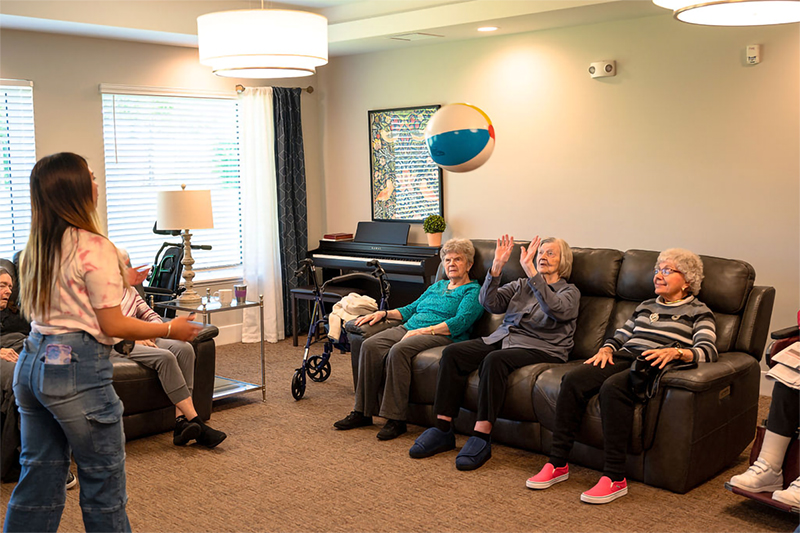
An activity calendar with bingo three times a week tells you bit. What you wish to see is spontaneous engagement layered over scheduled options. Aide-led moments matter most: a two minute reminiscence while buttoning a sweater, a stretch of a favorite big band tune during the afternoon downturn, an opportunity to arrange a box of golf tees by color at the table before dinner.
One resident I worked with, a former mail provider, circled around the unit each hour, agitated but purposeful. Personnel added a little handbag and a path of three doorframes with colored clips to move. He slept much better that week than he had in months. That is customization at work. It took no additional spending plan, just the humbleness to try a different approach.
Health management that prepares for problems
Dementia care intersects with medical care in untidy methods. A strong program tracks 3 metrics almost consistently: weight, bowel patterns, and sleep. Little discrepancies typically forecast bigger difficulty. A couple of pounds down over a week might be dehydration or a urinary system infection brewing. 3 nights of fragmented sleep often precede an agitation spike.
Medication evaluation should be iterative, not set and forget. Cholinesterase inhibitors, memantine, antidepressants, antipsychotics, and sleep representatives all have adverse effects that alter with time. Communities that coordinate quarterly with the medical care clinician or geriatrician tend to catch dose issues previously. After a hospitalization, insist on a full medication reconciliation. Hospital formularies frequently switch brands or include short-lived medications that need pruning.
Where respite care fits
Respite care uses a short stay, generally 7 to 1 month, inside a memory care community. It is not only for caregivers who require a break. Respite acts as a trial run for a longer relocation. It demonstrates how your parent handles the dining-room, whether the afternoon strolling practice interrupts others, and how the group changes the plan in real time.
Respite stays are more successful when the group treats them as a true onboarding, not a rotation through empty spaces. Bring the exact same individual items you would for an irreversible move: pictures at eye level, a favorite quilt, and clothes with familiar textures. Ask for a midpoint check-in. If the strategy calls for group exercise at 10 a.m. However your father sleeps finest up until 9:30, the 2nd week is the time to repair it.
Cost, contracts, and what the numbers actually buy
Pricing models vary. Some communities use complete rates, others utilize tiered care levels, and lots of work from a base rent plus point system for care tasks. Be prepared for varieties. In many regions, base monthly lease for memory care starts around 5,000 to 7,500 dollars. Care charges can include 1,000 to 4,000 dollars or more, depending upon needs like two person transfers or insulin management. Respite care typically costs day by day and might include bundled services, with rates roughly 200 to 400 dollars per night depending on the market.
Ask how rate increases are managed. Annual boosts of 3 to 8 percent are common, however midyear adjustments can take place if care needs surge. The reasonable concern is not whether expenses rise, however how transparently they are interacted and how the community assists families plan. Also ask about discharge criteria. If a resident begins to require experienced nursing interventions daily, will the neighborhood partner with home health to bridge the gap, or will they push for a transfer?
A basic touring list that keeps you focused
- Watch one meal from start to end up, including who helps and how long it takes locals to eat.
- Ask to see the care plan template and where staff view it throughout a shift, then demand one example with individual information redacted.
- Test call response in real time, either by observing or asking how response is tracked and reported.
- Meet a night shift employee or inquire about night routines, because habits often alter after dark.
- Ask how typically care plans are examined officially and how rapidly the team revises them after a change, then confirm with a current case example.
This list anchors what matters most: the daily mechanics of attention. Fancy lobbies and theater rooms do not alter a slow action to a bathroom cue.
Questions that separate sales talk from practice
When you ask, who composes the care strategy, listen for specifics. A credible answer names the nurse or care director and explains a schedule for strategy reviews, often at one month post move, then every 60 to 90 days, or after any substantial change. If you hear that strategies upgrade "as needed" without structure, expect wandering standards.
Ask how the home measures success. Neighborhoods that track resident-specific metrics, such as falls, weight stability, hospital transfers, and psychotropic medication usage, typically run tighter operations. If they can show a current drop in healthcare facility transfers after adding hydration carts or rest breaks, you have a team that tries to find source, not just symptoms.
Probe the oversight layers. Is there a medical director who rounds monthly, or is medical oversight fully external? Neither model is naturally much better, but the procedure matters. With external clinicians, interaction has to be intentional. Look for a clear path to same day orders when behavior intensifies and a backup for weekends.
Safety without overreach
Families frequently battle with the balance in between flexibility and containment. Door alarms and enclosed yards keep homeowners safe, but heavy-handed limitations can produce more agitation than they avoid. The very best programs customize gain access to. A resident who tries to exit after lunch however settles with a 10 minute walk needs a plan that consists of those strolls and a relied on personnel escort, not only a protected door and a reprimand.
Technology can assist, however it ought to not change staff awareness. Passive sensing units that discover bed exits, wearables that alert to border crossings, and discreet video cameras in typical areas may add layers of security. These tools work best when they feed into a reaction system that fasts and human. If staffing is thin, technology becomes a way to record issues instead of prevent them.
Family function and communication cadence
You bring history that no chart can hold. The most reliable neighborhoods treat households as partners without unloading duty back onto them. Search for weekly or biweekly updates during the first month, then a regular cadence that matches your choice. If you choose a quick text summary over long calls, state so. Shared online websites can work, but they must not end up being the only channel.
Expect to be asked for input after a behavior occasion, not only notified after the truth. If your mother started out throughout a shower, the team must contact us to learn what utilized to operate at home. Maybe she always bathed after breakfast, never before. Small timing changes typically loosen up big problems.
What to see throughout the very first 60 days
Most adjustments take place in the first 2 months. Appetite may dip, sleep may change, and family members typically second-guess the decision. The step of a strong program is how it responds. Do they attempt new meal seating after discovering your father consumes much better near the window? Do they change the toileting schedule when the early morning regular shows too hurried? You must see one or two documented plan tweaks in this window. If not, ask why. A plan that does stagnate is typically not being used.
If things fail, escalate thoughtfully. Start with the nurse or care director, then involve the executive director. Keep a basic log of dates and problems. Communities react quicker when you bring patterns, not just anecdotes. Most want to get it right, but they handle competing requirements. Your clearness helps.
Special considerations for various dementia profiles
Dementia is not monolithic. Customization gets sharper when the group understands particular patterns.
Alzheimer's disease tends to start with amnesia and slowly impacts language and spatial abilities. Individuals typically succeed with stable routines, uncluttered spaces, and repeated cueing that feels friendly rather than corrective. Nutrition and hydration assistance make a huge distinction since the sense of thirst can dull.
Lewy body dementia often brings visual hallucinations and marked fluctuations in attention. Sensitivity to antipsychotics prevails. A care plan here ought to list non-drug de-escalation first and include a clinician who knows which medications aggravate signs. Lighting and contrast adjustments help reduce misinterpretations of reflections or shadows.
Frontotemporal dementia can change personality, impulse control, or language early. Individuals might appear physically capable for a very long time, which can misinform groups into thinking assistances are unnecessary. Structured choices, a low stimulus environment, and short, direct hints work much better than open-ended questions. Safety plans should presume impaired judgment even when memory looks intact.
Vascular cognitive impairment often couple with movement and stroke-related modifications. Blood pressure management, safe transfers, and swallow safety measures need additional attention. The care plan must state who can offer hands-on support and when to utilize gait belts or two individual support.
The function of senior care partners outside the building
Memory care communities do not run alone. Home health agencies, hospice groups, geriatric psychiatrists, and therapists can add layers of support. Ask whether the neighborhood has actually preferred partners, how they pick them, and how rapidly services can start. A speech therapist included after a choking episode can re-train swallow methods and change food textures within days. A geriatric psychiatrist can reevaluate medications after a habits spike, preferably with laboratory work and ECG review if needed.
Respite care can also knit these partners together. A 7 day remain after a hospitalization offers time for therapy while the caregiver rests and enjoys how the plan carries out without the pressure of making an irreversible move.
A quick case vignette: when a small modification made the plan work
Mr. Thompson, a retired machinist with moderate Alzheimer's, moved into memory care after 2 roaming occurrences and weight loss of 6 pounds in a month. The initial plan noted cueing for meals and set up walks at 10 a.m. And 2 p.m. Within a week, staff noted agitation from 4 to 6 p.m., with pacing and refusals at supper. The care director met the daughter, who discussed her father always tested food while cooking and did not like congested tables.
They tried two tweaks. Initially, they provided a little plate of finger foods at 4 p.m., then seated him at a two top near the kitchen entrance, not in the center. Second, they shifted the afternoon walk to 4:15 p.m., with a time out by the courtyard grill. In three days, refusals dropped, and he acquired a pound by week 3. No brand-new medications were included. The care strategy was updated in the record, and all aides got a quick briefing. This is how customization looks in practice: small, testable modifications based upon history, observed, then tape-recorded so the next shift can duplicate them.
Red flags that indicate poor follow-through
You will not constantly get a straight response throughout a tour. View actions. If staff members do not welcome locals by name, or if you see the same individual calling for assistance consistently without reaction, that is a signal. If no one can reveal you an existing care plan or they say it lives just in a corporate system that staff can not access on the unit, anticipate gaps.
High use of as-needed psychotropic medications is another warning sign. Occasional use might be proper, however regular PRN usage without a behavioral plan suggests the team handles crises with pills instead of preventing them with environment and routine.
Be careful if the house pushes to move quickly without sufficient evaluation, or if they assure to handle everything without asking for your input. Speed is not the opponent, but thoughtful speed is rare. A two to 5 day window to gather history, set up a space that feels familiar, and set expectations is time well spent.
How to choose when 2 options both appear acceptable
Sometimes you discover more than one community that might work. Then the choice rests on fit and mechanics instead of a single apparent winner. Visit unannounced at a different hour. Call the nurse and inquire about a recent strategy modification for any resident, not by name, to comprehend their procedure. Ask to see the schedule for personnel training this quarter. Small distinctions in culture emerge when you try to find them: how a manager speaks with an assistant, whether the dishwasher welcomes homeowners, if maintenance fixes a flickering bulb without being asked twice.
If every aspect seems equivalent, weigh distance and your own peace of mind. A community 10 minutes away that you will visit regularly typically outperforms a somewhat fancier one forty minutes away. Household existence smooths shifts and lowers preventable escalations. It also keeps the team responsible, in a friendly way.
The throughline: a strategy that resides on the floor
Personalized memory care is not a shiny binder. It is lots of little, consistent acts delivered by people who know the resident well. The ideal community makes these acts repeatable. It develops regimens that outlive staff modifications, trains non-stop, and welcomes families into the loop without handing the concern back to them.
Respite care can be more than a break. It can be the proving ground that reveals whether a strategy will hold. Senior care alternatives are broad, and the very best choice for one family may be wrong for another. When you concentrate on a living care strategy, supported by people who can adjust in real time, you discover the signal inside the noise.
BeeHive Homes of Maple Grove provides assisted living care
BeeHive Homes of Maple Grove provides memory care services
BeeHive Homes of Maple Grove is a memory care home for seniors
BeeHive Homes of Maple Grove provides respite care services
BeeHive Homes of Maple Grove offers 24-hour support from professional caregivers
BeeHive Homes of Maple Grove offers private bedrooms with private bathrooms
BeeHive Homes of Maple Grove provides medication monitoring and documentation
BeeHive Homes of Maple Grove serves dietitian-approved meals
BeeHive Homes of Maple Grove provides housekeeping services
BeeHive Homes of Maple Grove provides laundry services
BeeHive Homes of Maple Grove offers community dining and social engagement activities
BeeHive Homes of Maple Grove features life enrichment activities
BeeHive Homes of Maple Grove supports personal care assistance during meals and daily routines
BeeHive Homes of Maple Grove promotes frequent physical and mental exercise opportunities
BeeHive Homes of Maple Grove provides a home-like residential environment
BeeHive Homes of Maple Grove creates customized care plans as residents’ needs change
BeeHive Homes of Maple Grove assesses individual resident care needs
BeeHive Homes of Maple Grove accepts private pay and long-term care insurance
BeeHive Homes of Maple Grove assists qualified veterans with Aid and Attendance benefits
BeeHive Homes of Maple Grove encourages meaningful resident-to-staff relationships
BeeHive Homes of Maple Grove delivers compassionate, attentive senior care focused on dignity and comfort
BeeHive Homes of Maple Grove has a phone number of (763) 310-8111
BeeHive Homes of Maple Grove has an address of 14901 Weaver Lake Rd, Maple Grove, MN 55311
BeeHive Homes of Maple Grove has a website https://beehivehomes.com/locations/maple-grove/
BeeHive Homes of Maple Grove has Google Maps listing https://maps.app.goo.gl/n99VhHgdH879gqTH8
BeeHive Homes of Maple Grove has Facebook page https://www.facebook.com/BeeHiveMapleGrove
BeeHive Homes of Maple Grove won Top Memory Care Homes 2025
BeeHive Homes of Maple Grove earned Best Customer Service Award 2024
BeeHive Homes of Maple Grove placed 1st for Senior Living Memory Care Communities 2025
People Also Ask about BeeHive Homes of Maple Grove
What is the monthly room rate at BeeHive Homes of Maple Grove?
The monthly rate depends on each resident’s care needs, room selection, and personalized care plan. Before move-in, we complete an initial assessment to better understand your loved one’s health, safety, mobility, personal care, and memory care needs. From there, we provide clear pricing based on the level of support required. Our goal is to keep families informed with transparent pricing and no hidden fees.
Does BeeHive Homes of Maple Grove only offer Memory Care?
BeeHive Homes of Maple Grove offers enhanced assisted living with specialized memory care support. We are experienced in caring for seniors living with Alzheimer’s, dementia, and other forms of memory loss, while also welcoming residents who may not have a dementia diagnosis but would benefit from a secure, highly personalized care environment. Our homelike setting is especially helpful for seniors who are earlier in their dementia journey, as well as those who need extra structure, daily support, meaningful routines, and compassionate oversight. Each resident receives care tailored to their needs, helping them feel safe, supported, and truly at home.
Can residents stay at BeeHive Homes through the end of life?
In many cases, yes. Our goal is to help residents remain in a familiar, comforting environment for as long as we can safely meet their needs. There may be exceptions if a resident requires 24-hour skilled nursing services or has needs that cannot be safely supported in our memory care setting. When care needs change, our team works closely with families, physicians, hospice providers, and other care professionals to help make the next step as smooth and compassionate as possible.
Do you have nurses on staff?
Yes. BeeHive Homes of Maple Grove has a team of Registered Nurses who provide care oversight, assessments, care planning, and coordination with other healthcare professionals. The typical RN schedule is Monday through Friday from 7:00 AM to 6:00 PM and weekends from 9:00 AM to 5:30 PM, with a Registered Nurse on call after hours. This helps families feel confident that their loved one’s changing memory care needs are being monitored with attention and compassion.
What are the visiting hours at BeeHive Homes of Maple Grove?
Family and friends are welcome to visit anytime. Because routine is especially important for residents with memory loss, we encourage visitors to avoid scheduled meal times when possible: 8:00 AM, 11:30 AM, and 4:30 PM. Visits are an important part of helping residents feel connected, loved, and at home.
Are the rooms private?
Yes. Residents enjoy private memory care suites with fully accessible bathrooms. Families are encouraged to personalize the room with familiar furniture, photos, keepsakes, and comforting touches that help the space feel like their loved one’s own. BeeHive Homes of Maple Grove also offers accommodations for couples who wish to remain together, depending on availability./p>
How do I schedule a tour or learn more?
You can call BeeHive Homes of Maple Grove at 763-310-8111 to ask questions, discuss availability, or schedule a personal tour. Visiting in person is one of the best ways to experience the warmth of the home, meet the care team, and see whether BeeHive Homes is the right fit for your loved one.
What makes BeeHive Homes of Maple Grove different from larger memory care communities?
BeeHive Homes of Maple Grove offers memory care in a smaller, more personal residential setting. Residents are known by name, supported according to their individual routines, and cared for in a warm environment that feels like home. From private suites and home-cooked meals to life enrichment activities and secure spaces, our approach is centered on comfort, dignity, and meaningful connection.
Where is BeeHive Homes of Maple Grove located?
BeeHive Homes of Maple Grove is conveniently located at 14901 Weaver Lake Rd, Maple Grove, MN 55311. You can easily find directions on Google Maps or call at (763) 310-8111 Monday through Sunday 7am to 7pm.
How can I contact BeeHive Homes of Maple Grove?
You can contact BeeHive Homes of Maple Grove by phone at: (763) 310-8111, visit their website at https://beehivehomes.com/locations/maple-grove, or connect on social media via Facebook
Residents may take a trip to the Maple Grove History Museum The Maple Grove History Museum provides a calm, educational outing suitable for assisted living and senior care residents during memory care or respite care excursions